Designing a personal research library feature for Canvas LMS

Designing a personal research library feature for Canvas LMS

PRODUCT

ED TECH

ROLE

Product Designer

Product Designer

TEAM

Solo

Solo

TIMELINE

6 weeks

6 weeks

SKILLS

Product Design
Product Strategy
Product Thinking

Product Design
Product Strategy
Product Thinking

Problem

Problem

You remember the reading. You just can't find it.

Small wins. Big picture.
Everything that you're already accomplishing, finally made visible.

Solution

Solution

(Anushka

Vhatkar)

One search, any course. Your academic history should be yours to keep.

Small wins. Big picture.
Everything that you're already accomplishing, finally made visible.

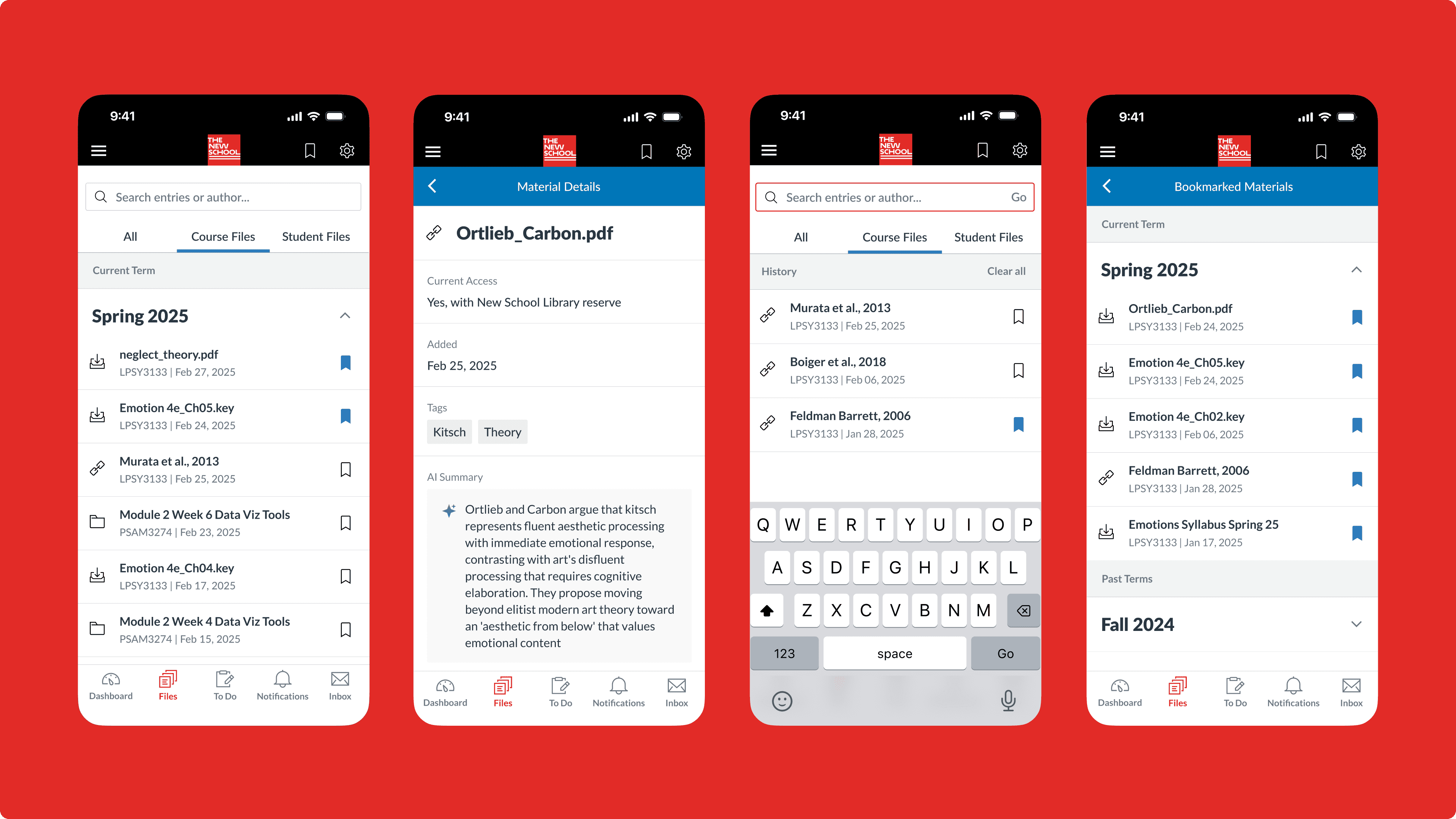
Files is a permanent, searchable library of all your Canvas materials—organized by context, accessible forever.

SMART SEARCH

Find materials by content, tags, or context

CONTEXT PRESERVATION

Course info, dates, and summaries attached

PERMANENT ACCESS

Your library remains accessible to you post-grad

Process

Process

(Anushka

Vhatkar)

Why students can remember academic materials but not always locate them

1
1

We remember meaning and context, not file names and course paths

CLASSIFICATION -> Validated my need for flexible tagging and multiple categorisation methods
Users struggle to classify items consistently, and often can't remember what labels they assigned
CLASSIFICATION -> Validated my need for flexible tagging and multiple categorisation methods
Users struggle to classify items consistently, and often can't remember what labels they assigned
MEMORY VS RECALL-> Informed my decision to preserve course context and include AI summaries
We remember context and gist, not exact details. Our recall also depends on the right mental cues
MEMORY VS RECALL-> Informed my decision to preserve course context and include AI summaries
We remember context and gist, not exact details. Our recall also depends on the right mental cues
TWO-STEP RETRIEVAL -> Shaped dual approach of precise search and browser preview
There are two steps to retrieving information: recall-directed search and recognition-based scanning
TWO-STEP RETRIEVAL -> Shaped dual approach of precise search and browser preview
There are two steps to retrieving information: recall-directed search and recognition-based scanning
2
2

Tracing where the search falls apart

3
3

3.

3.

And thus, the two structural problems preventing the retrieval of materials

IMPOSSIBLE NAVIGATION

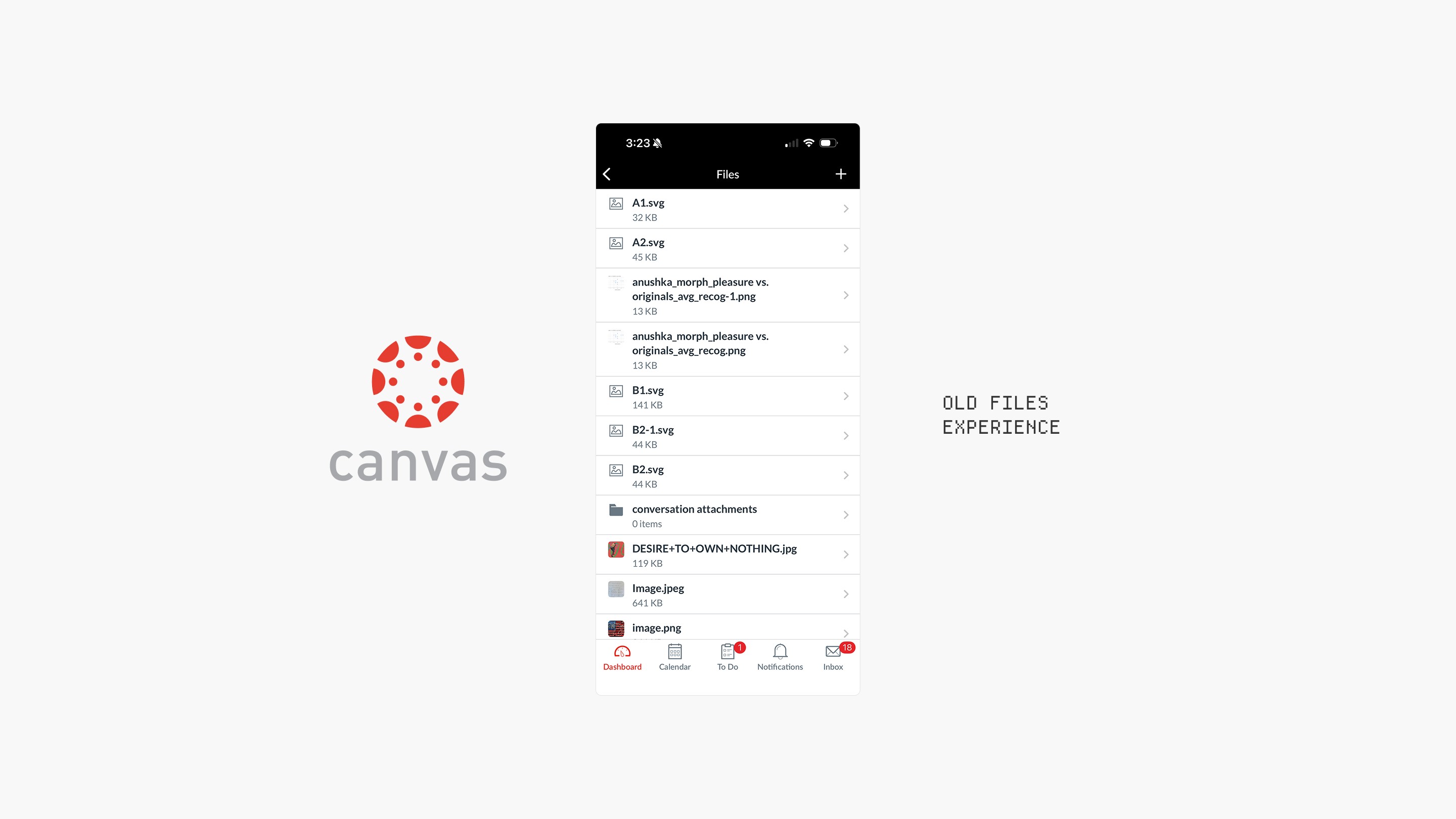
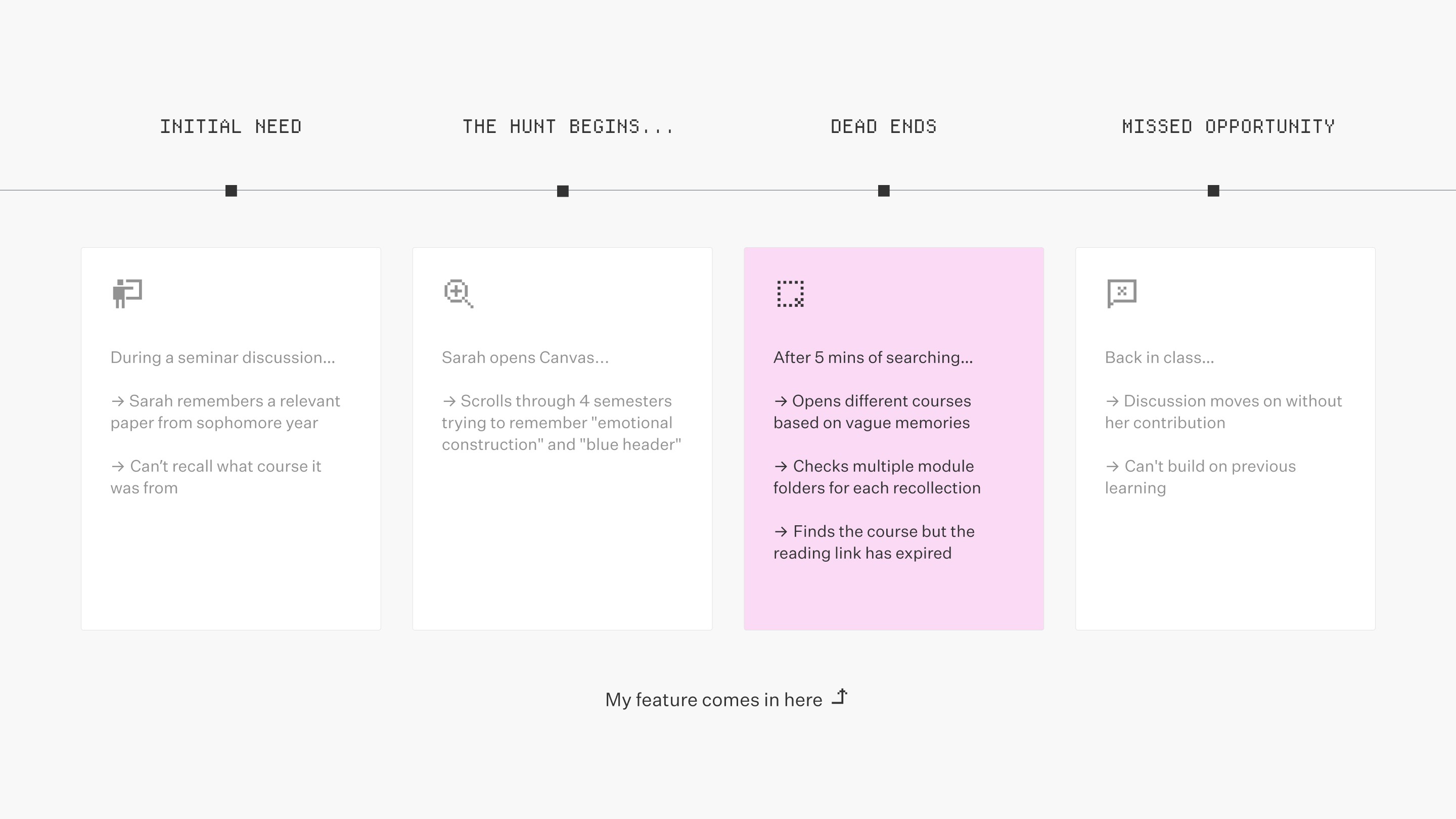
Finding materials requires remembering exact course locations instead of content—students can't search across courses or use natural memory cues like "that paper about emotional construction"

TEMPORARY ACCESS

Finding materials requires remembering exact course locations instead of content—students can't search across courses or use natural memory cues like "that paper about emotional construction"

User Testing

User Testing

(Anushka

Vhatkar)

Testing and adapting the solution based on what students actually need…

1
1

1.

1.

1.

1.

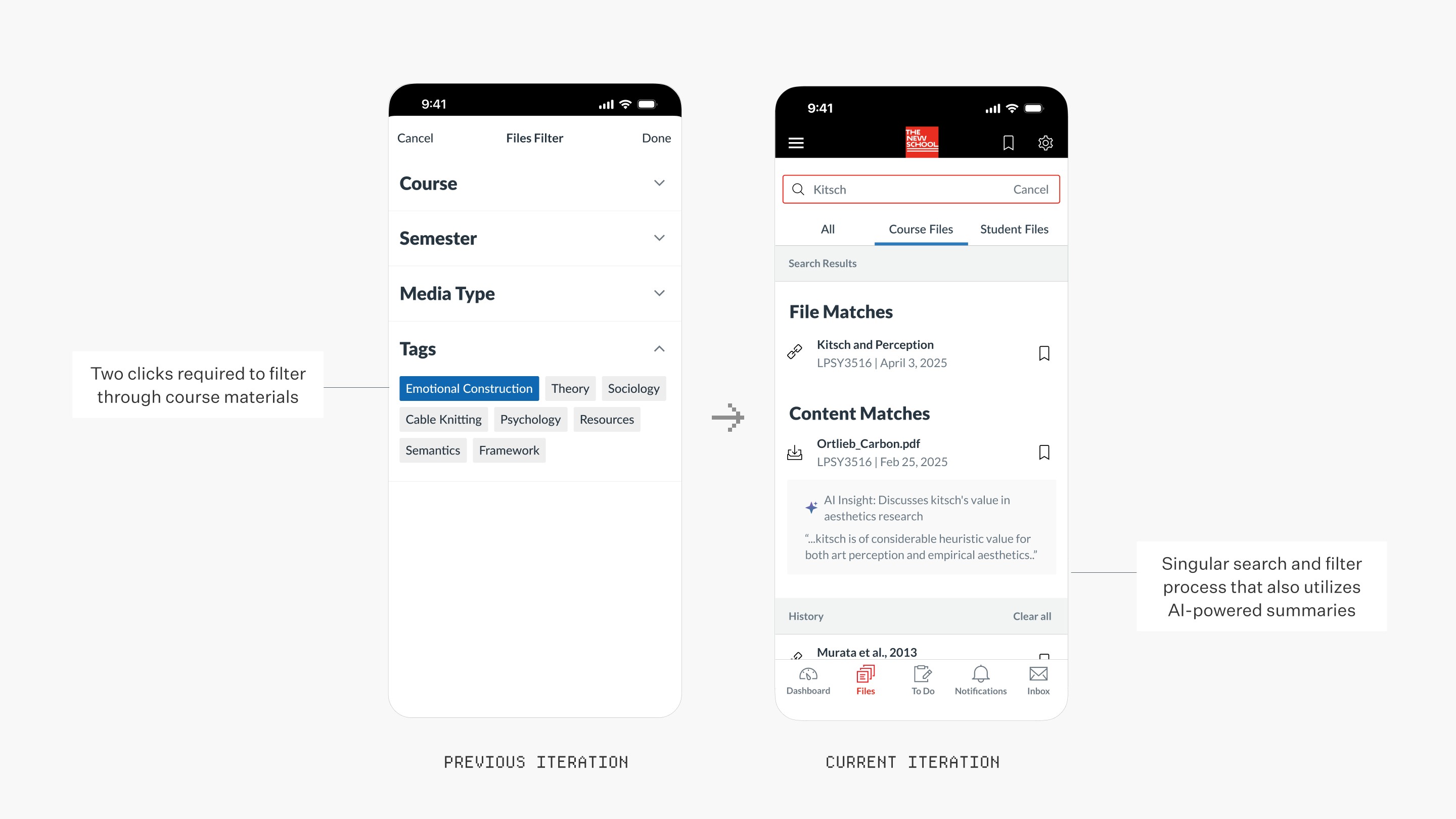
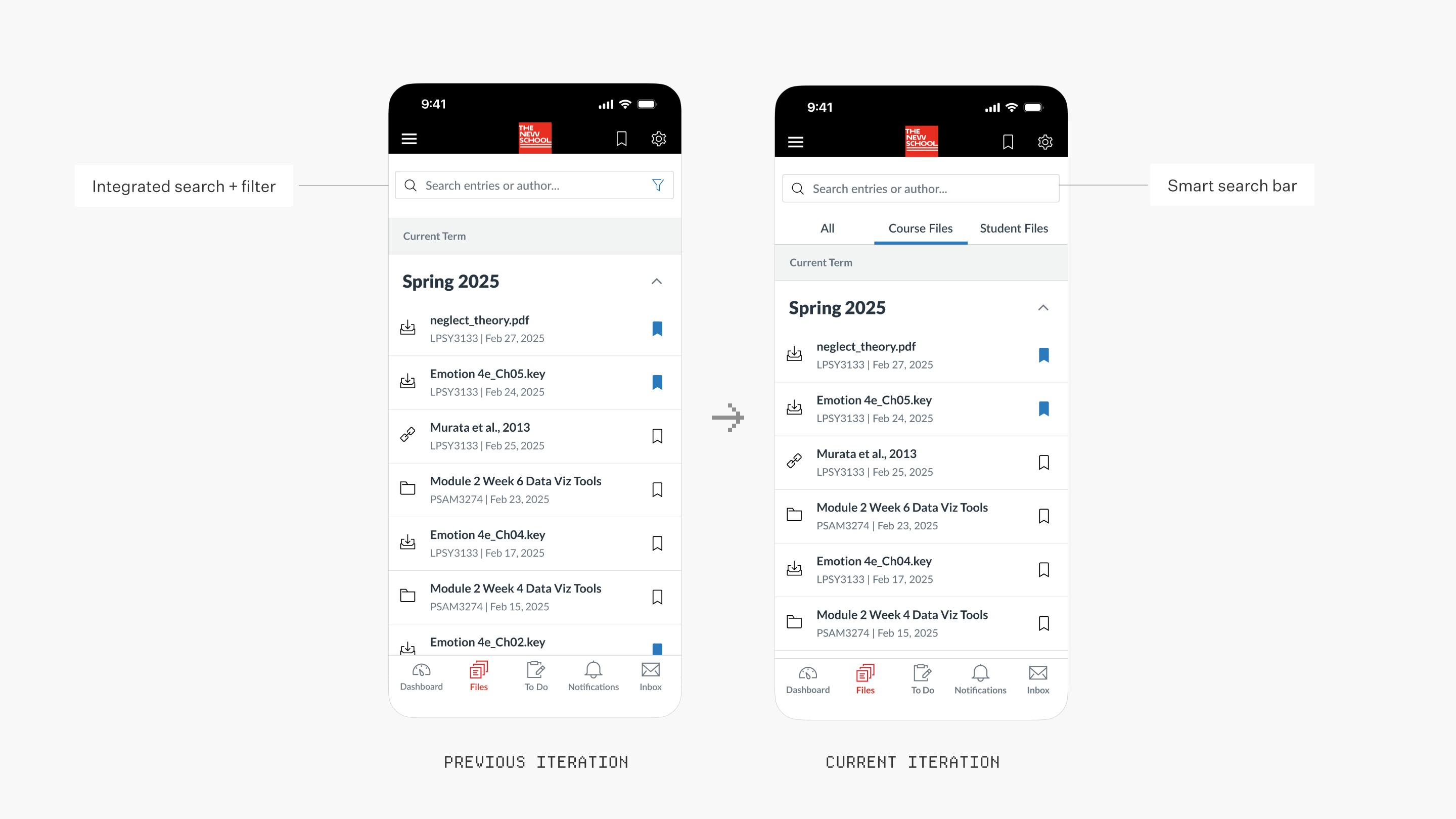
Users see search/filter as one task—they just want to find
FINDING
-> Users don't distinguish between search and filter when asked to locate materials, viewing it as part of the same task
IMPACT
-> This revealed the need for unified search that understands courses, tags, semesters, and content in one input
2
2

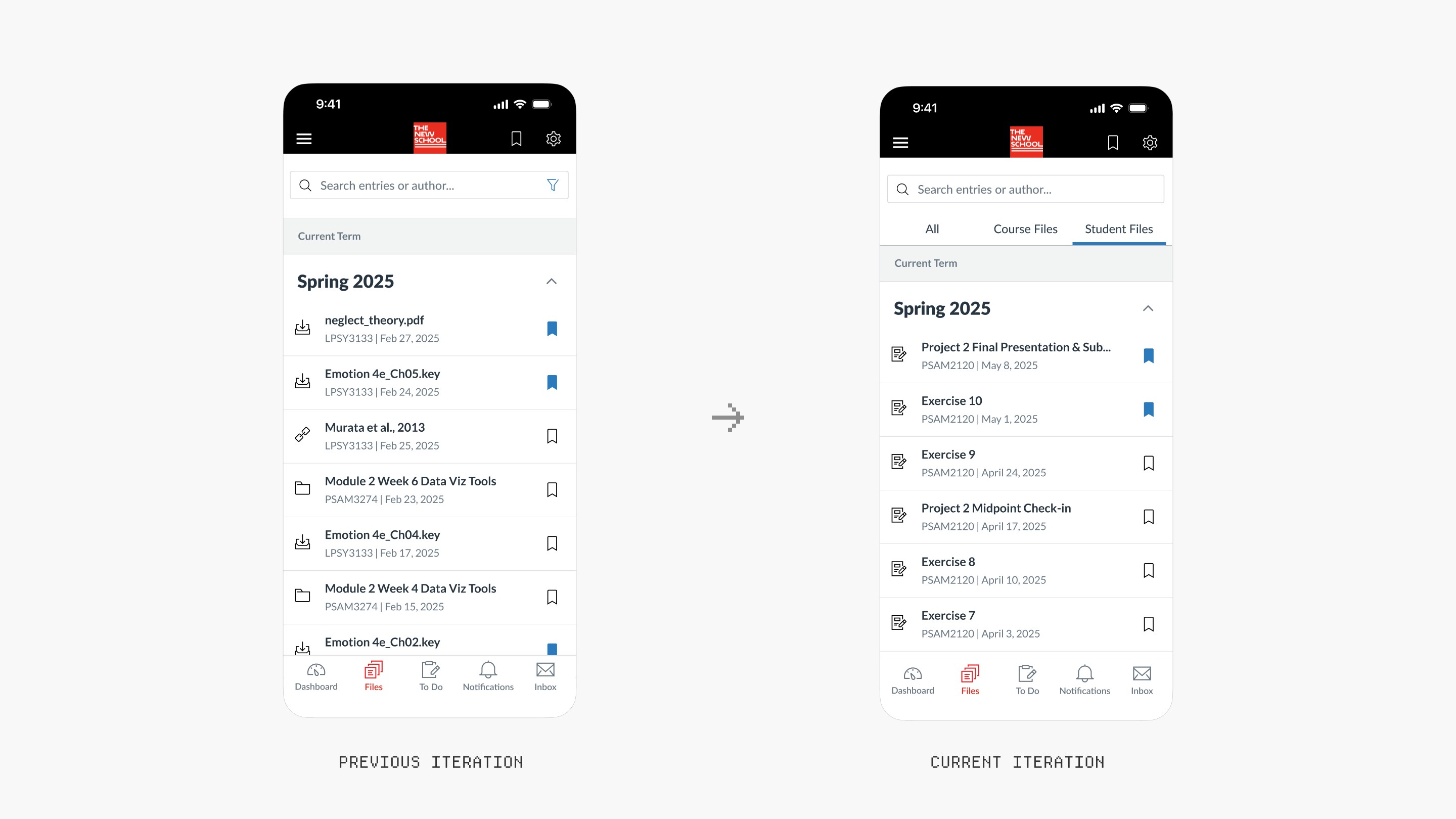
Students also create valuable work that gets lost in their submissions
FINDING
-> Users want to retrieve their own submitted artifacts (assignments, group projects, decks, etc), just as much as course readings
IMPACT
-> Expanded the feature to include "Student Files" to preserve the work students create, not just what they consume

Final Design

Final Design

(Anushka

Vhatkar)

From nested folders to instant access—seamless retrieval of what you've learnt

Small wins. Big picture.
Everything that you're already accomplishing, finally made visible.

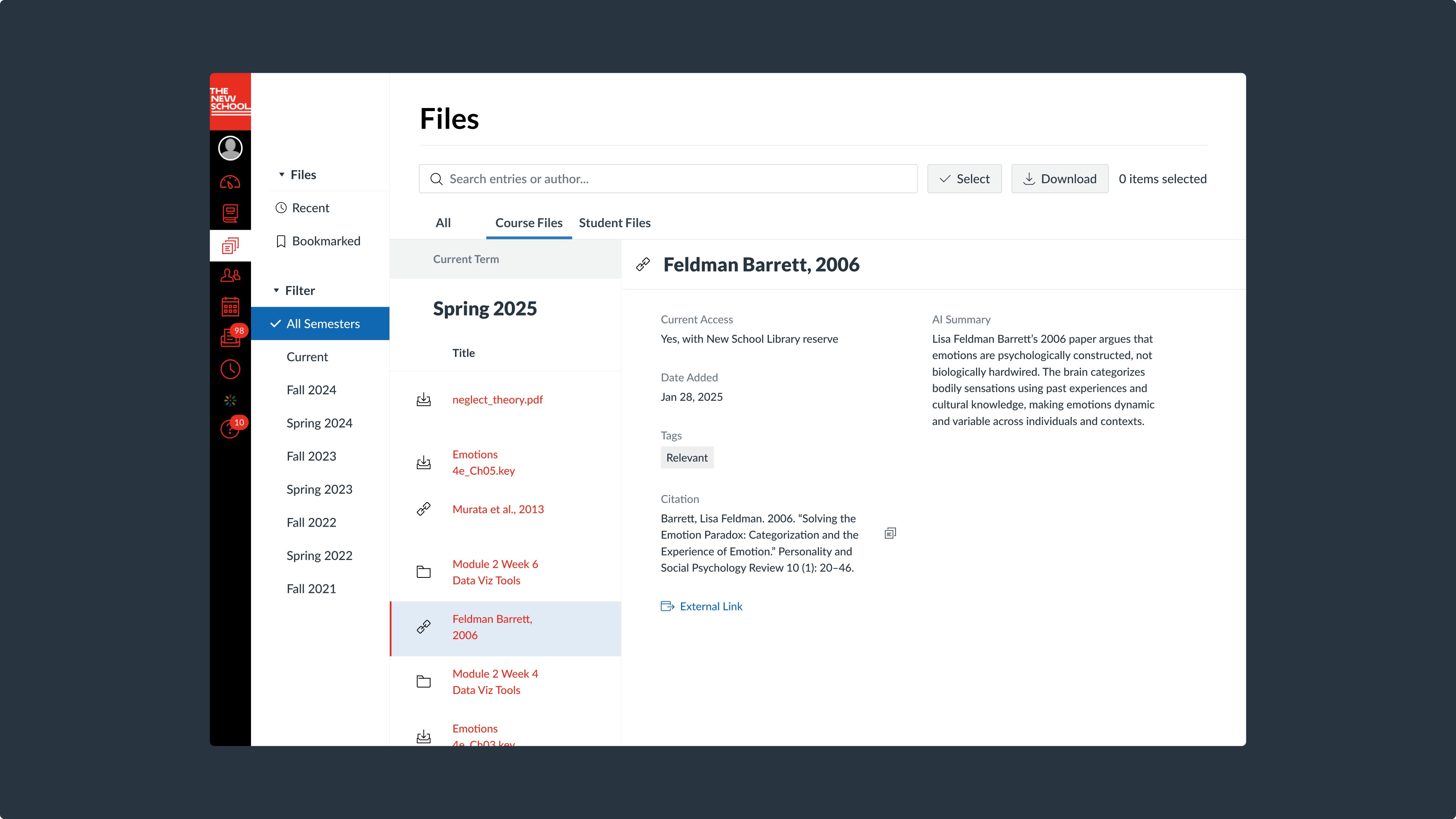
AI-Powered Summaries

Visualizing the feature beyond mobile

Smart Search & Discovery

Reflection

Reflection

(Anushka

Vhatkar)

1
1

1.

1.

Design for the user, not the feature

The most humbling insight was re-discovering users saw searching and filtering as the same thing. I carefully separated these functions, but users just wanted to describe what they needed and find it. This taught me to design for user mental models, not just pure logic.

The most humbling insight was re-discovering users saw searching and filtering as the same thing. I carefully separated these functions, but users just wanted to describe what they needed and find it. This taught me to design for user mental models, not just pure logic.

2
2

2.

2.

There's power in domain knowledge

Having been a Canvas user for years gave me deep empathy for the problem, but I learned to validate my assumptions through research and testing. The Lansdale paper on information psychology helped me understand why I struggled to find old materials, not just that I struggled.

Having been a Canvas user for years gave me deep empathy for the problem, but I learned to validate my assumptions through research and testing. The Lansdale paper on information psychology helped me understand why I struggled to find old materials, not just that I struggled.

Thanks for stopping by, don't stay a stranger

y

Thanks for stopping by, don't stay a stranger

y