PRODUCT
WELLNESS
ROLE
TEAM
TIMELINE
SKILLS
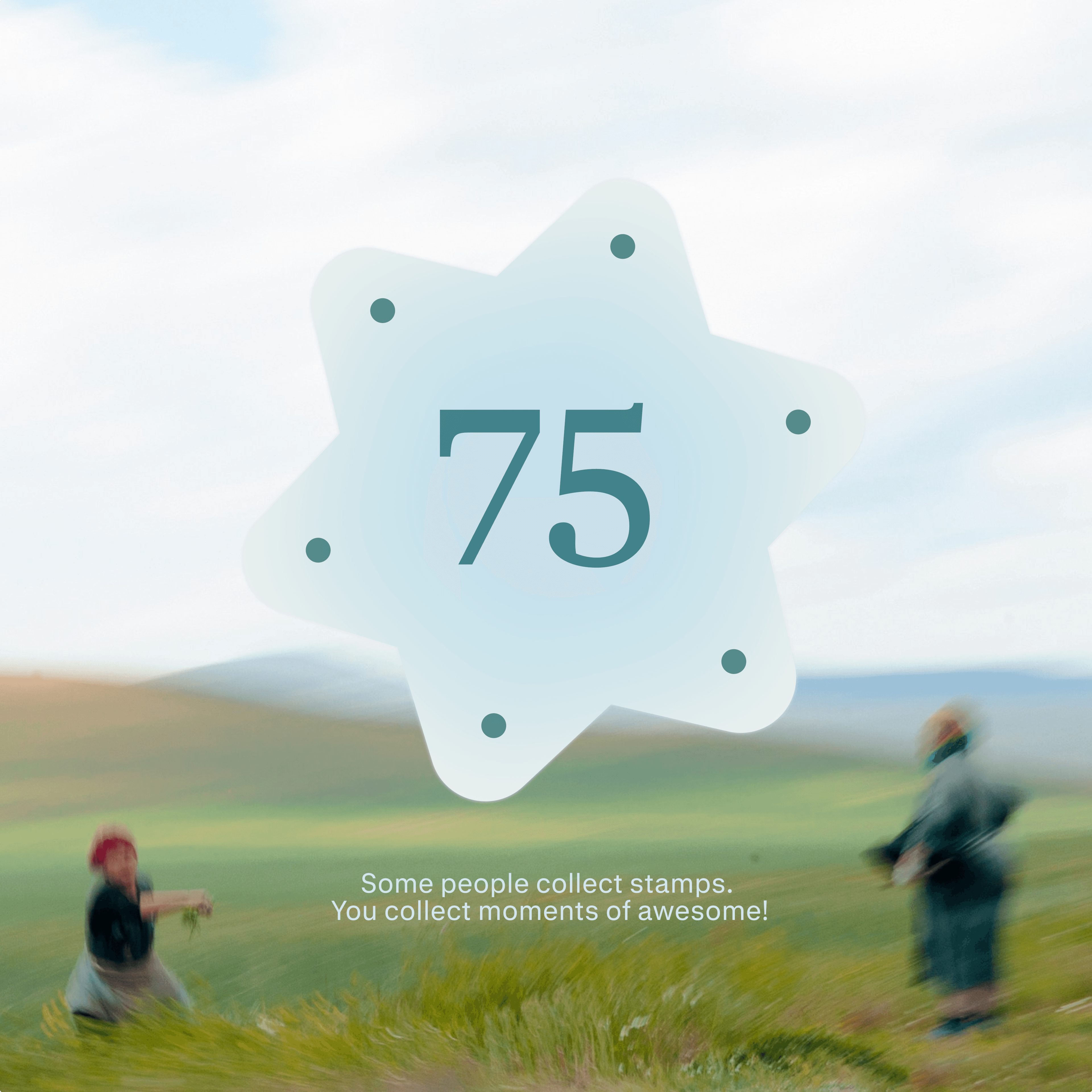

What is the psychology behind achievement and recognition?
[AMABILE & KRAMER, 2011]
[AMABILE & KRAMER, 2011]
[TSAI, 2007]
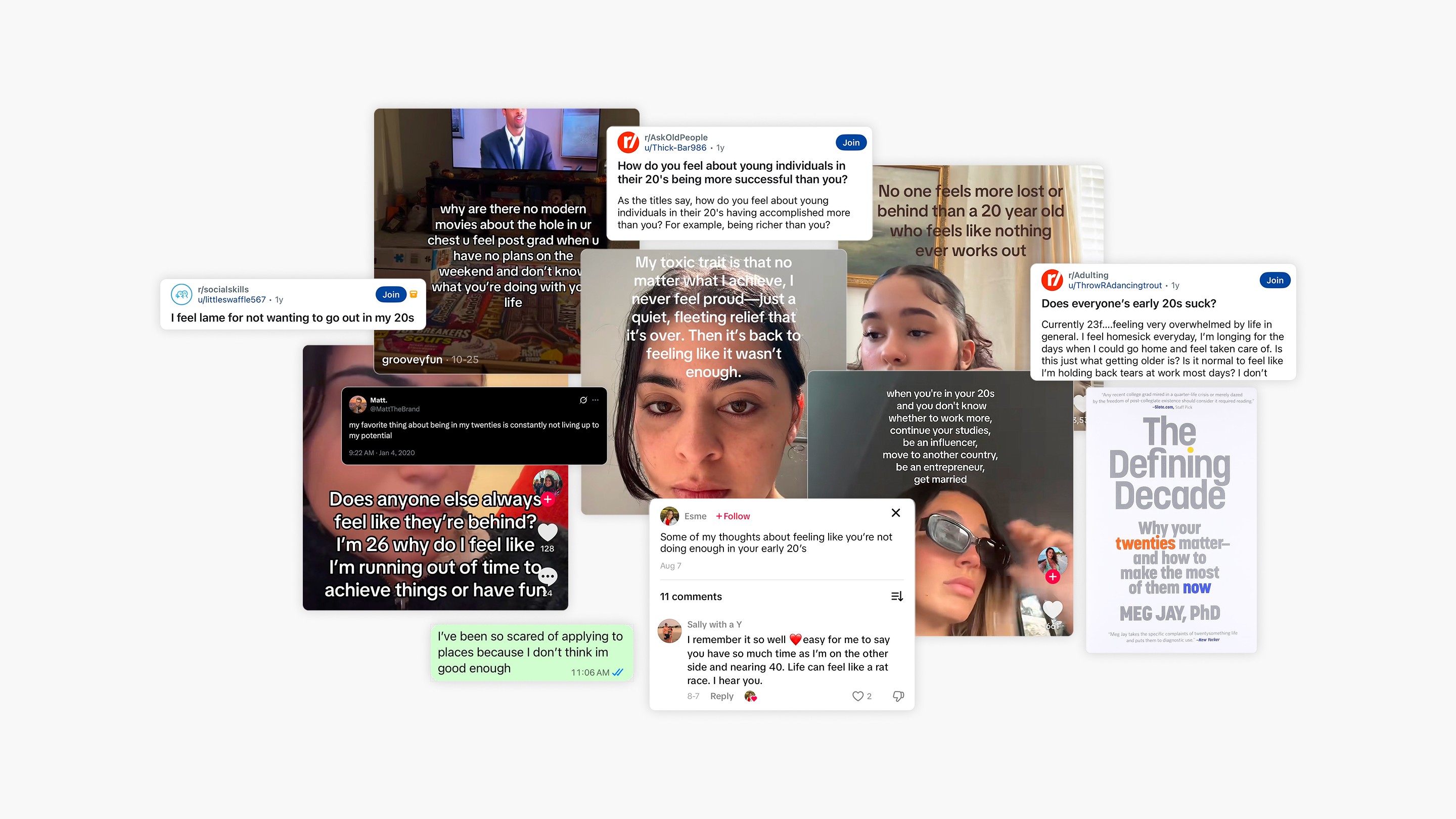
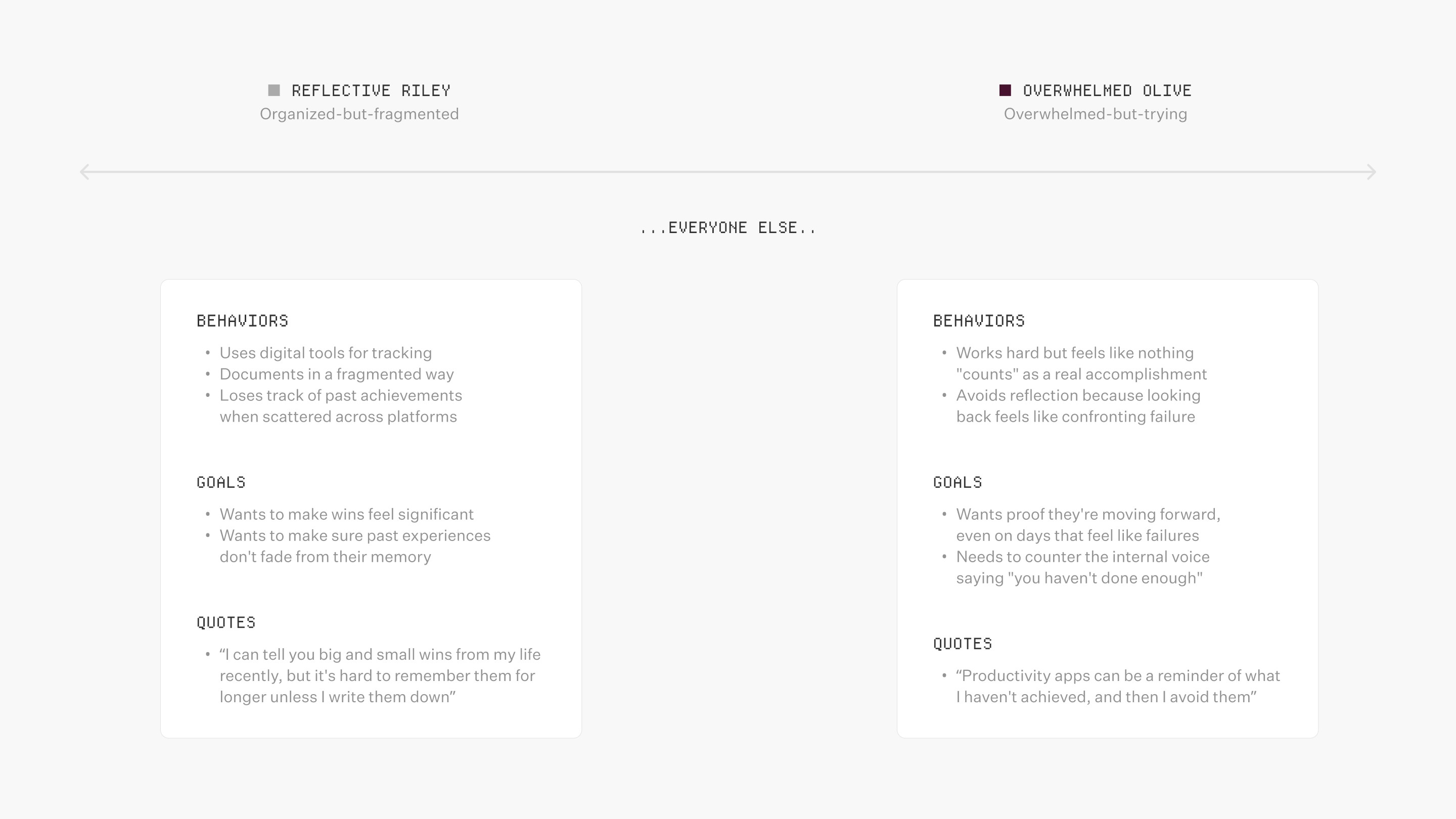
Synthesizing user interviews into two distinct design targets
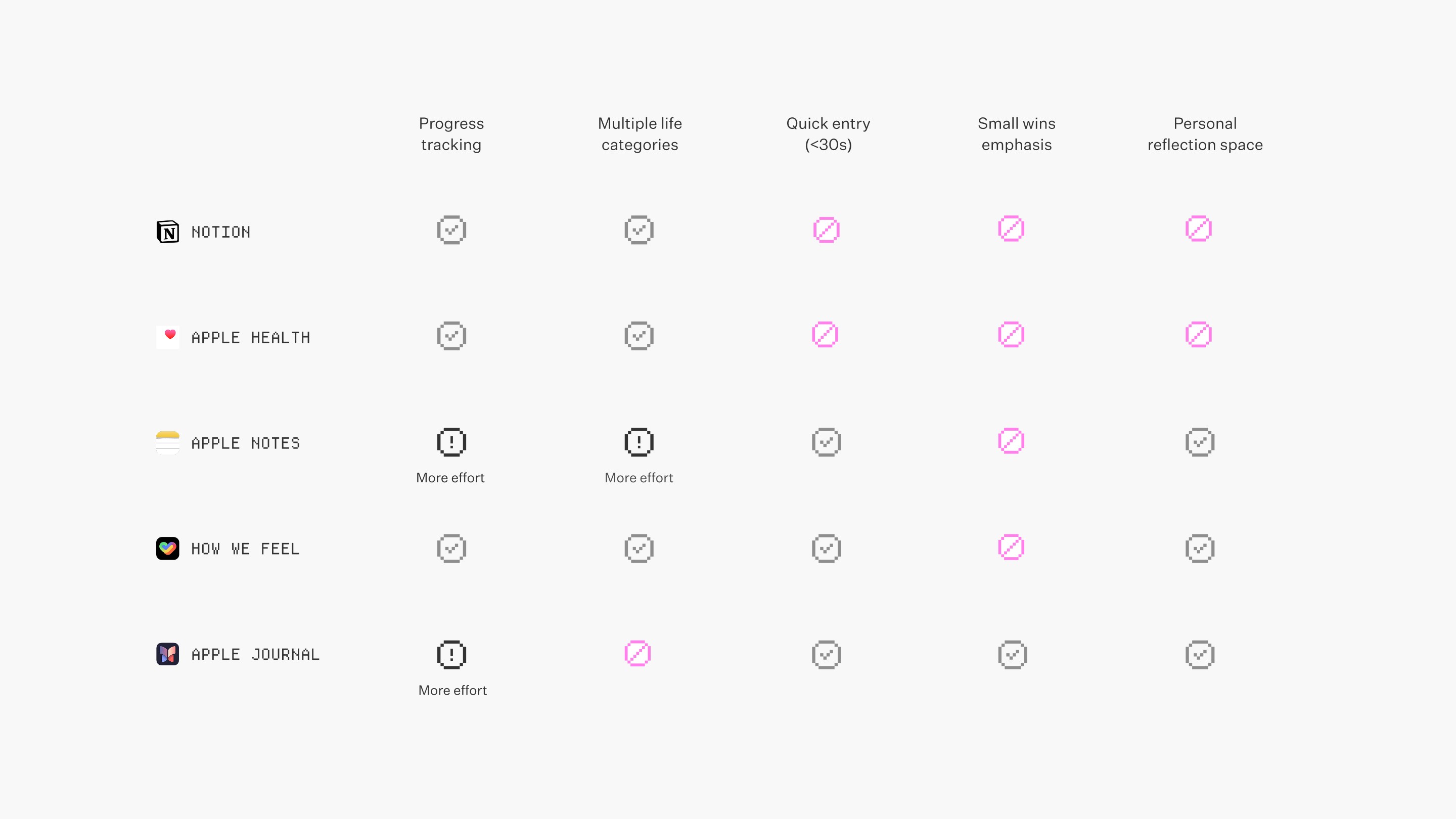
Why current tools aren't enough (finding market-fit)
How does my design resonate with users?
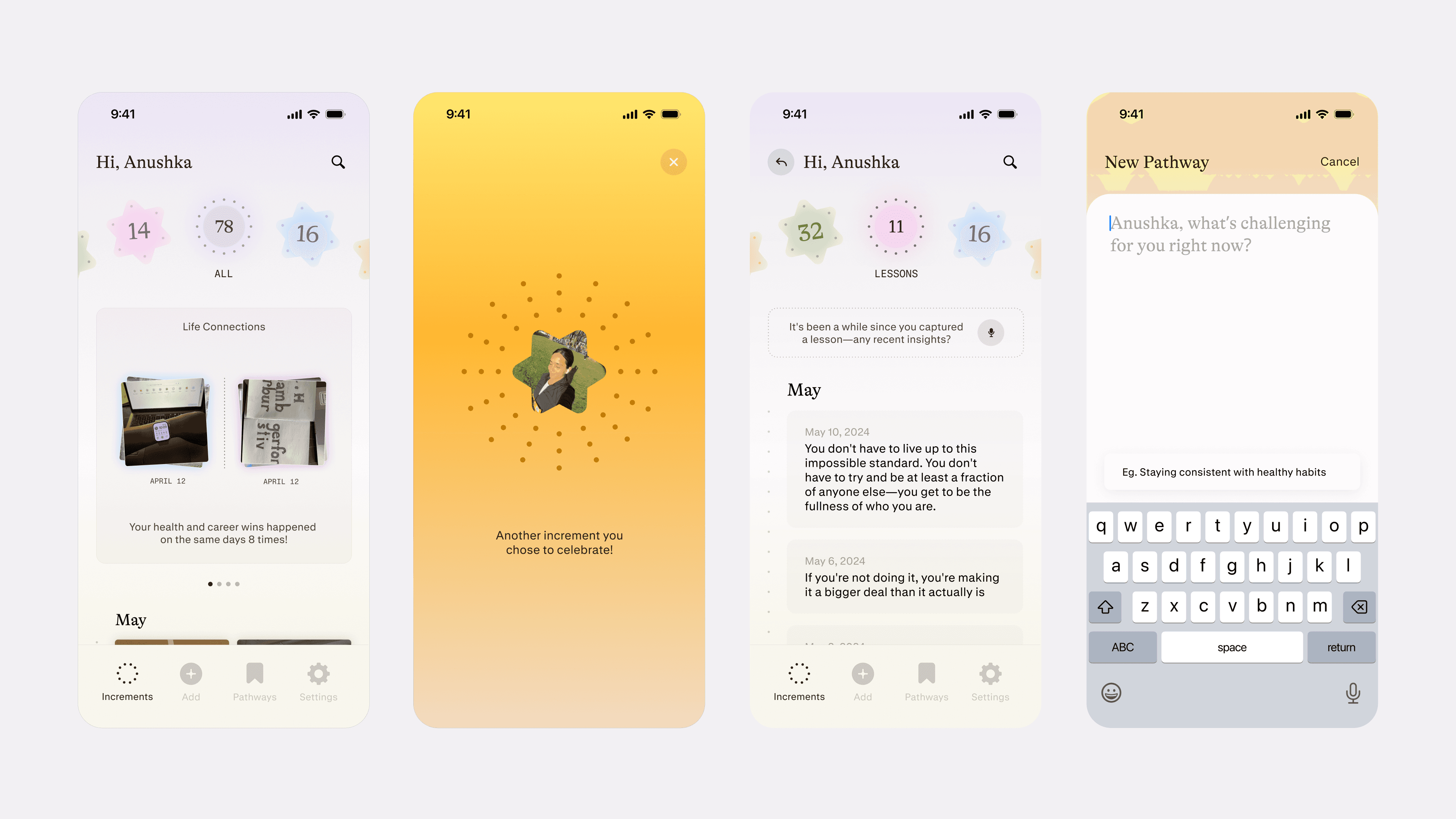
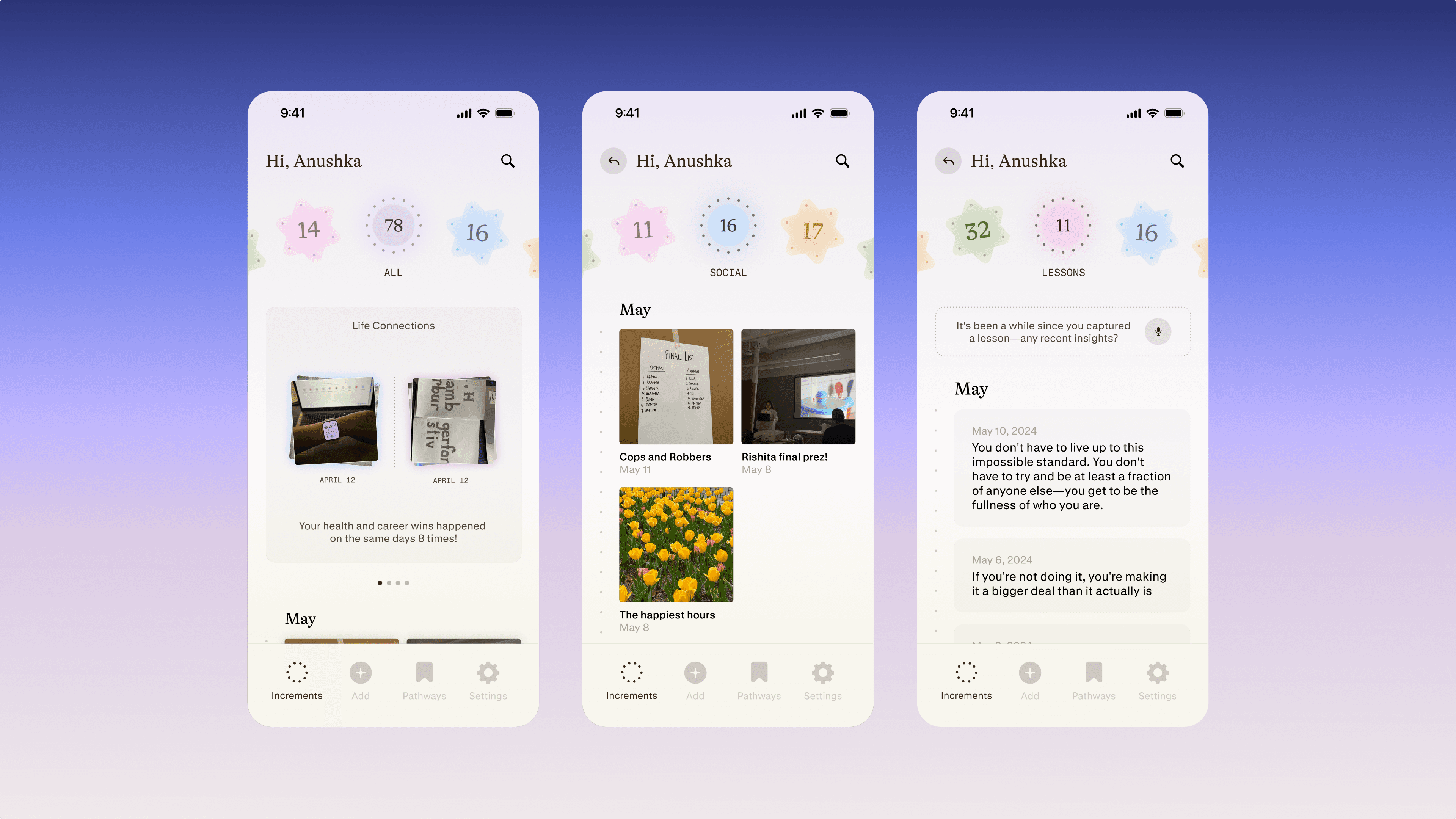
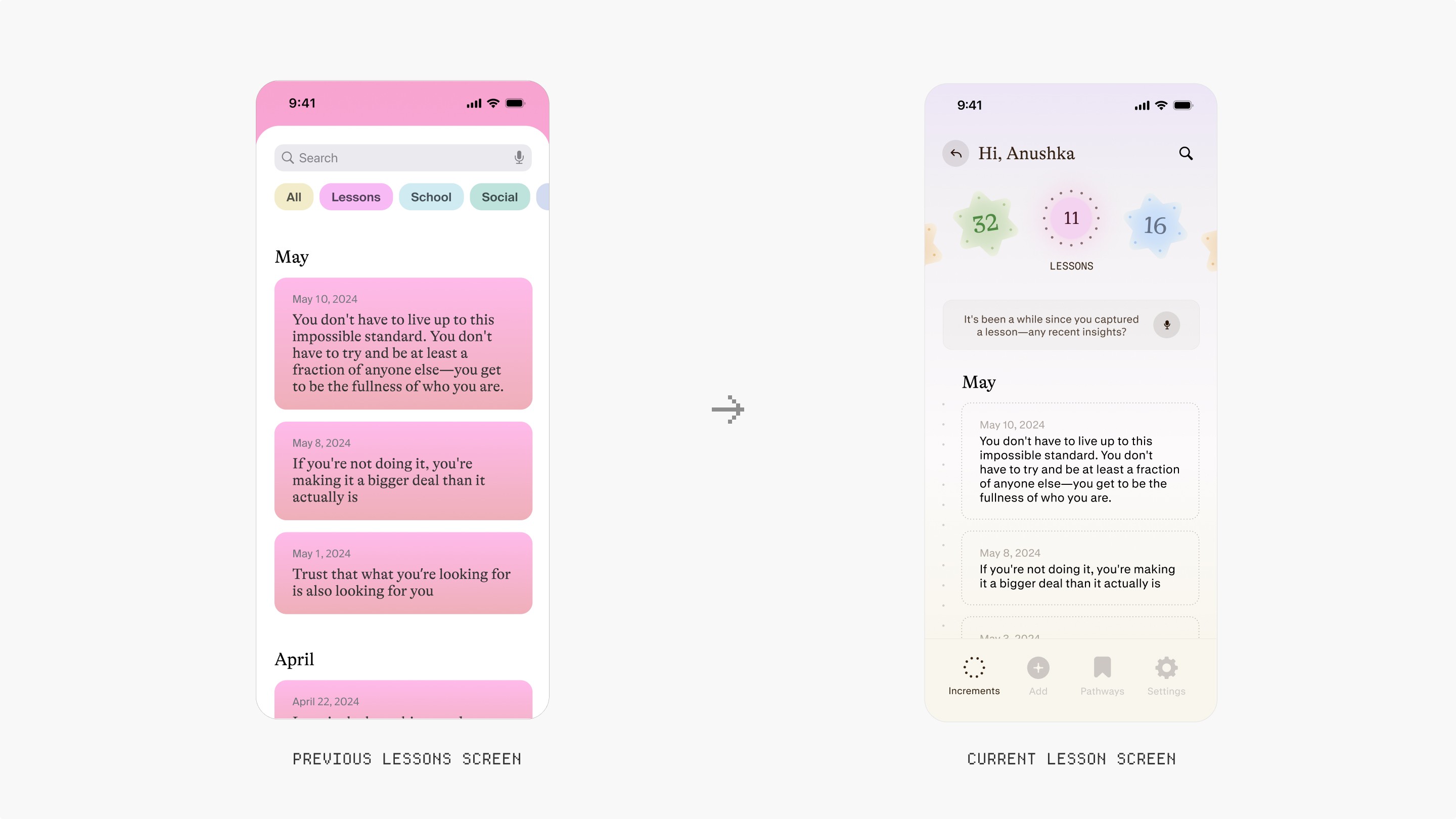
Clinical expertise meets design: adding a Lessons tab
FINDING
-> Sarah Simon (my professor with clinical experience at Mount Sinai) recommended applying Positive Affect Treatment (PAT) theory to the app
-> She suggested integrating lesson extraction specifically
IMPACT
-> PAT research shows that narrative construction around experiences creates lasting positive affect (happiness!)
-> By leveraging this, the app helps users build a personal reflection repository alongside momentary celebrations.
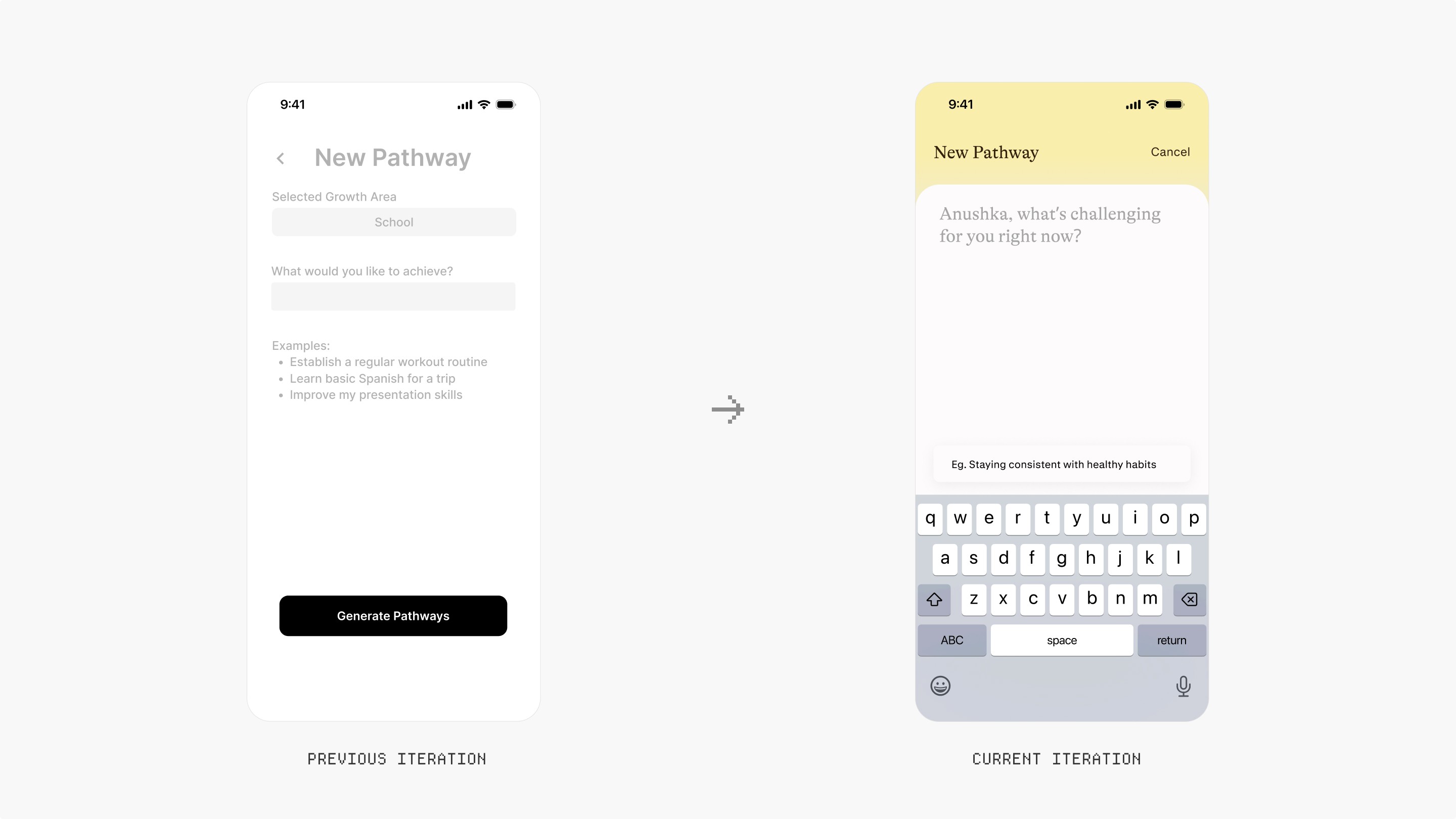
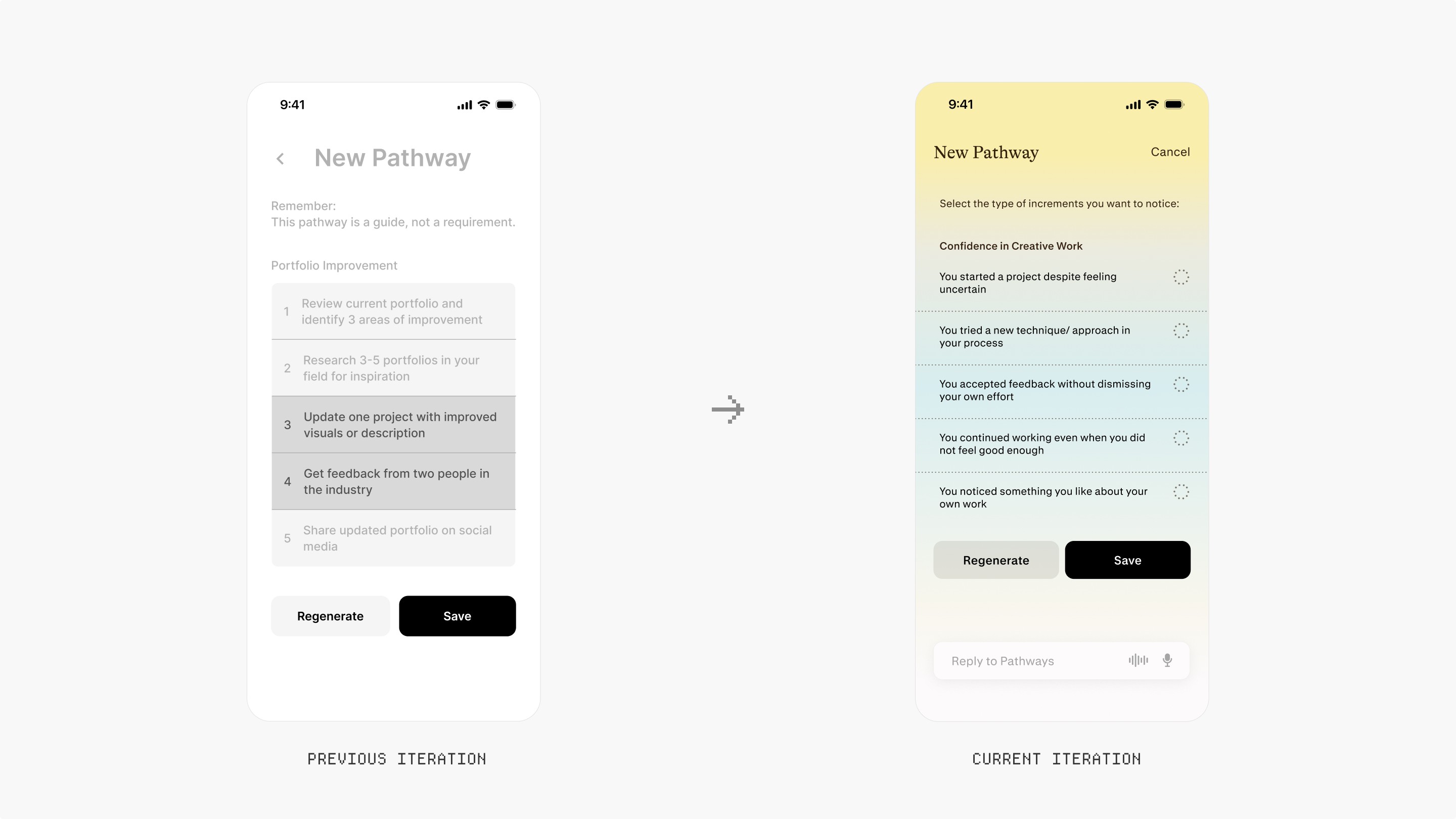
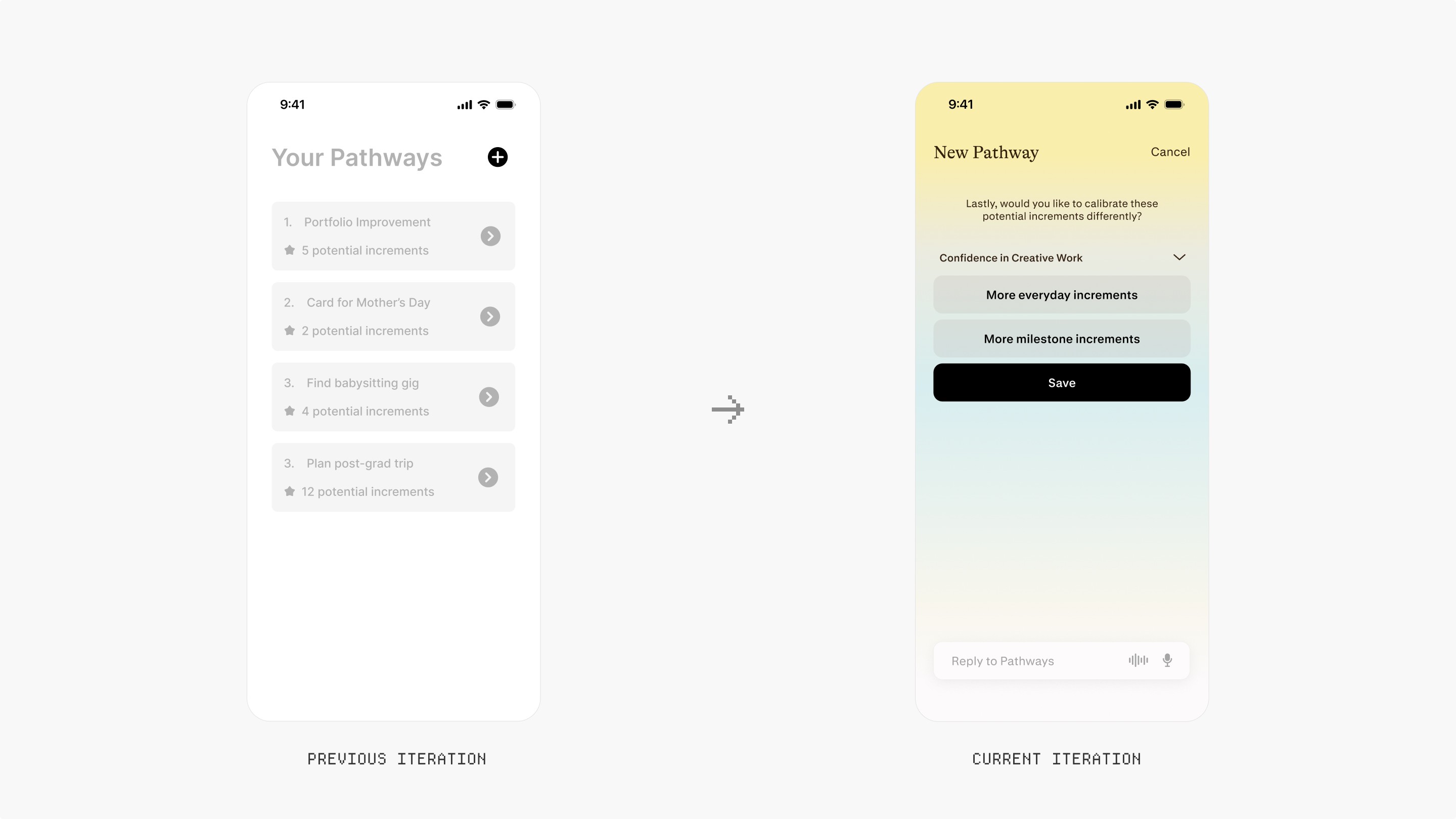
One-size-fits-all goal generation overwhelms already stressed users
FINDING
-> One of my target personas (the Overwhelmed Olives) felt additional pressure from auto generated goals
-> AI-prompted goals felt like more "shoulds" added to their plate, contrary to the product mission
IMPACT
-> This led to making Pathways an opt-in feature with customizable intensity levels
-> Ensuring it supports users wherever they are rather than adding to their burden